Understanding the Mechanics of Encrypted API Communications Between Mobile Payment Devices and Recurring Billing Platforms in Compliance with Data Security Standards
Written by Willa Bennett · Nov 8, 2026
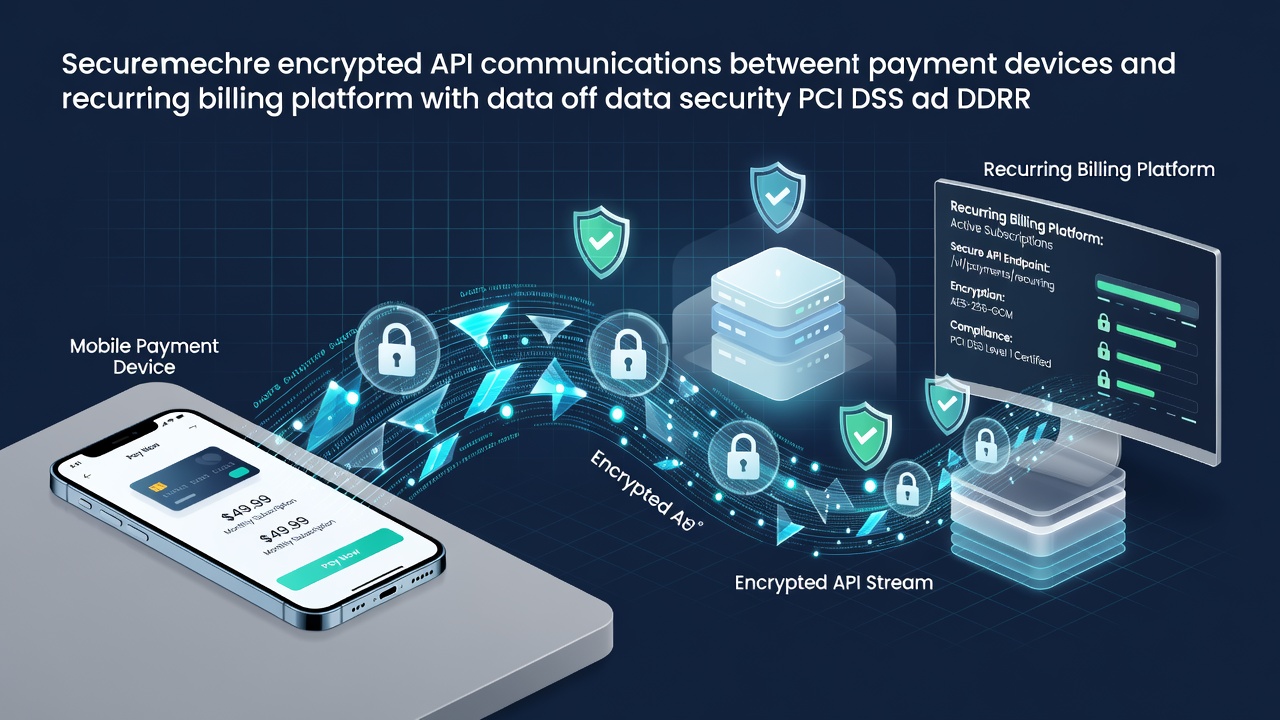
Understanding the Mechanics of Encrypted API Communications Between Mobile Payment Devices and Recurring Billing Platforms in Compliance with Data Security Standards
Encrypted API communications form the backbone of secure interactions between mobile payment devices and recurring billing platforms, where data travels through protected channels that meet established security frameworks. Mobile devices capture card details or tokens at the point of sale, then package that information into API requests formatted according to standardized protocols before transmission occurs over public networks. These requests travel to billing platforms that handle scheduled charges, and the entire exchange relies on layers of encryption to prevent interception or tampering during transit.
Core Encryption Protocols in API Handshakes
Transport Layer Security version 1.3 serves as the primary protocol for establishing secure sessions between devices and servers, where the handshake process negotiates cipher suites that include algorithms such as AES-256 for bulk encryption and elliptic curve Diffie-Hellman for key exchange. Observers note that this version reduces latency compared to earlier iterations by combining multiple steps into fewer round trips, which proves useful when mobile devices operate on variable network connections. Certificate pinning further strengthens the process by ensuring devices only accept certificates from expected authorities rather than any presented during a connection attempt.
Application-level encryption adds another barrier, as sensitive elements like primary account numbers receive additional wrapping through format-preserving encryption or token substitution before they even enter the API payload. Researchers have documented how these combined approaches satisfy requirements outlined in data security standards that mandate protection for cardholder data both in motion and at rest on intermediate systems.
Authentication Mechanisms and Token Handling
Mutual authentication occurs when both the mobile device and the billing platform verify each other's identities through client certificates or API keys signed with private keys stored in hardware security modules. This step prevents unauthorized endpoints from injecting requests into the recurring billing workflow. Once authenticated, the system generates session tokens that carry limited scope and short expiration periods to reduce the window for replay attacks.
Recurring platforms often rely on stored credentials represented as tokens rather than raw card data, so API calls from mobile devices reference those tokens during subsequent charge cycles. Data shows that this substitution method aligns with guidelines from the PCI Security Standards Council, which specify that tokens must derive from validated processes that remove sensitive elements from the merchant environment. PCI Security Standards Council documentation outlines the technical controls that support such implementations across different device types.
Data Flow from Device to Platform
A typical sequence begins when a mobile payment device assembles a request containing transaction amount, schedule identifier, and encrypted payload, then transmits it through an HTTPS endpoint exposed by the billing platform. The receiving server decrypts the outer transport layer, validates the inner payload signature, and routes the instruction to the scheduler that manages recurring charges. Intermediate proxies may inspect headers for rate limiting yet cannot access decrypted content because keys remain segregated from those systems.
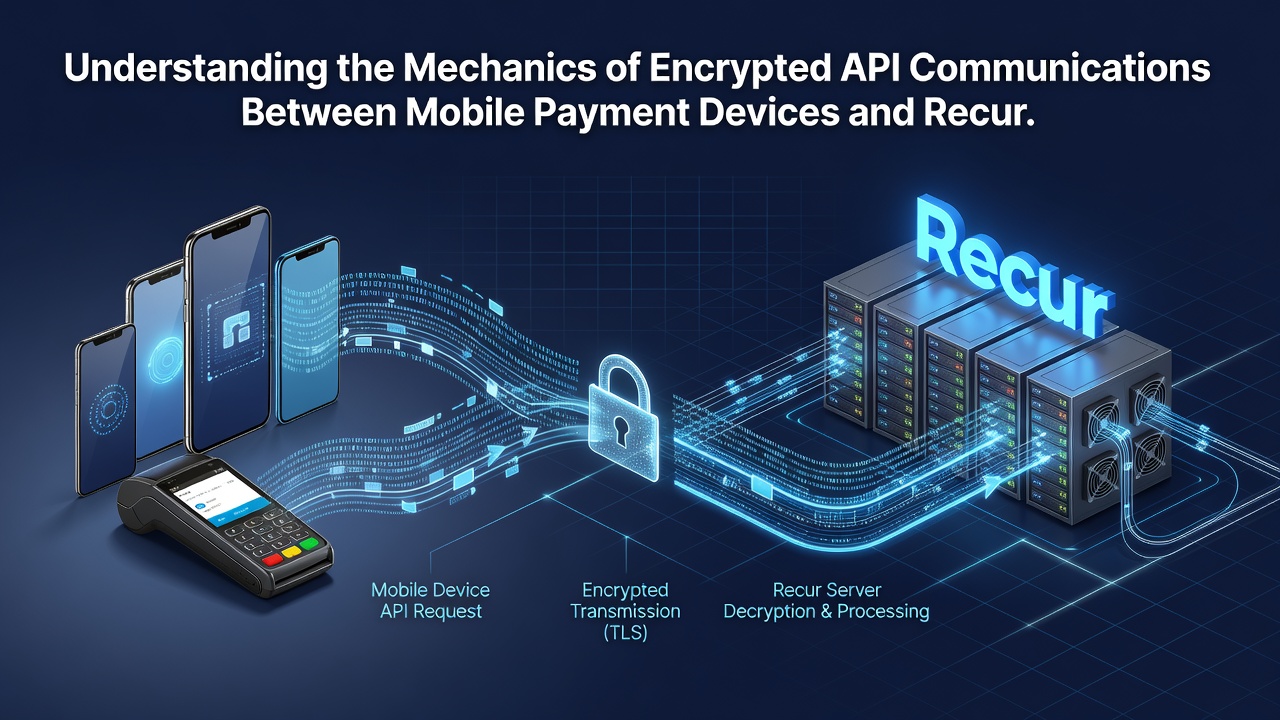
Response messages travel back along the same encrypted path, carrying authorization codes or decline reasons without exposing full card details. Studies from regulatory bodies in the European Union indicate that consistent use of these flows reduces exposure points compared to legacy dial-up methods that previously handled similar recurring transactions. ENISA reports on payment security highlight measurable declines in certain incident categories after widespread adoption of API encryption standards.
Compliance Controls and Key Management
Key rotation schedules form a critical part of ongoing compliance, with organizations updating encryption keys at intervals that prevent long-term compromise even if a single key leaks. Mobile devices receive updated public keys through secure over-the-air channels that themselves undergo encryption and signing verification. Audit logs capture each key exchange and API call with timestamps and device identifiers, enabling forensic review without storing the actual sensitive values.
Regular penetration testing and code reviews verify that no plaintext data paths exist between the device application and the recurring engine. Those who maintain these systems report that automated compliance scanning tools flag deviations from expected cipher lists or certificate validity periods before they reach production environments.
Conclusion
Encrypted API communications between mobile payment devices and recurring billing platforms operate through layered protocols, mutual authentication, and token substitution that collectively satisfy data security standards. The mechanics rely on established cryptographic practices that continue to evolve with updates to transport security versions and key management procedures. Organizations that implement these flows maintain audit trails and rotation schedules that support verification against regulatory expectations across multiple jurisdictions.