How Campus Kiosks Coordinate with Automated Tuition Cycles in Academic Networks Under Data Security Rules
Written by Willa Bennett · Aug 24, 2026
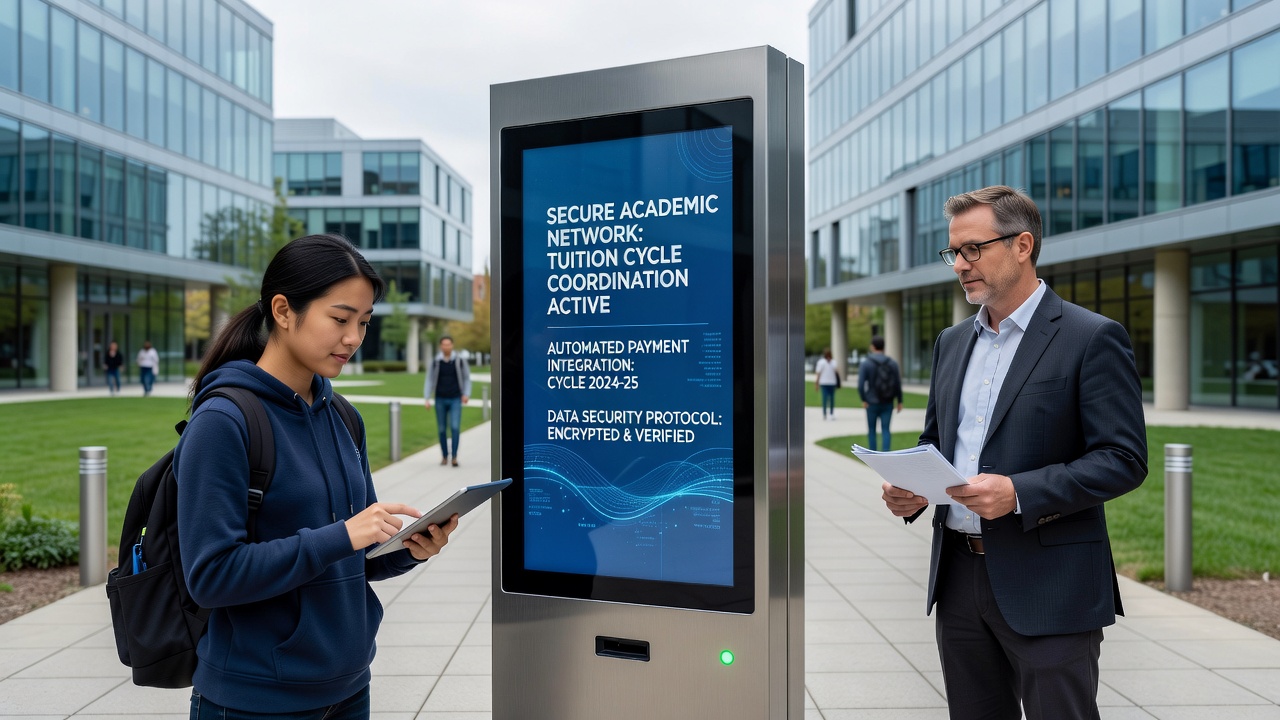
How Campus Kiosks Coordinate with Automated Tuition Cycles in Academic Networks Under Data Security Rules
Campus kiosks serve as physical access points that connect directly to university billing platforms and allow students to complete tuition transactions without visiting administrative offices, while these devices operate within networks that schedule recurring charges based on enrollment data and academic calendars. Automated tuition cycles pull information from student information systems to generate payment due dates, and kiosks transmit card details or account credentials through encrypted channels that comply with established security frameworks such as PCI DSS and FERPA guidelines.
Integration Mechanisms Between Kiosks and Academic Billing Systems
Academic institutions configure kiosks to interface with central servers that manage tuition cycles, so when a student selects a payment option at the device the kiosk forwards transaction requests to the billing engine that already holds enrollment and financial aid records. Data flows through API connections that update account balances in real time, and the system then schedules any remaining installments according to the institution's published academic term deadlines. Observers note that synchronization occurs nightly or upon enrollment changes, which ensures that kiosks display accurate outstanding amounts rather than outdated figures.
Security protocols require tokenization of card information at the kiosk level before transmission, and this step prevents raw account numbers from traveling across the academic network. Institutions apply multi-factor authentication for administrative access to these systems, and regular audits verify that encryption standards meet current PCI DSS requirements. In August 2026 several universities plan to implement updated key rotation schedules that align with revised NIST guidelines for payment data handling in educational environments.
Data Security Frameworks Governing Tuition Transactions
FERPA regulations restrict the sharing of student financial information, which means kiosk networks must isolate tuition records from general campus directories while still allowing authorized billing staff to view aggregated cycle reports. PCI DSS compliance adds another layer that mandates point-to-point encryption between kiosks and payment processors, along with quarterly vulnerability scans of all connected devices. Researchers at multiple institutions have documented how these overlapping rules shape network architecture, particularly when kiosks operate on the same infrastructure that supports library systems and course registration portals.
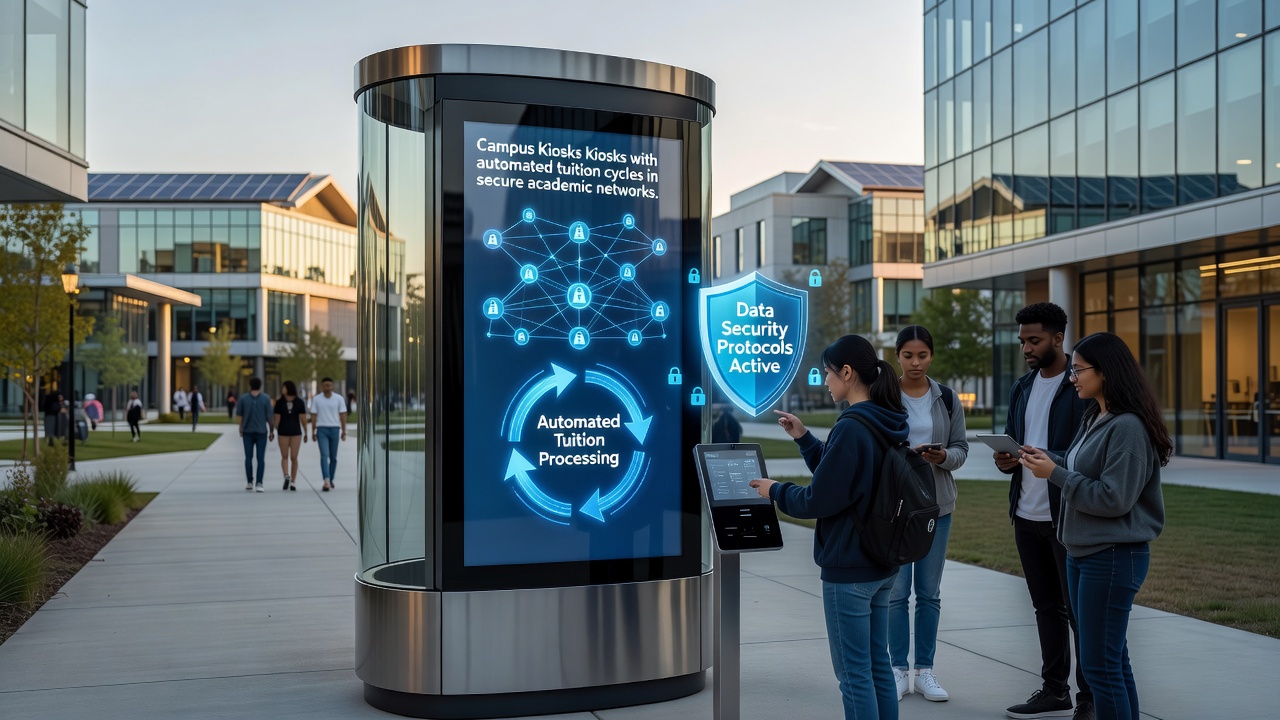
European institutions that enroll international students must also address GDPR requirements for cross-border data transfers, and this often leads to separate processing pathways for EU residents versus domestic students. Canadian universities follow similar patterns under PIPEDA, which requires explicit consent before any recurring tuition charge is activated through a kiosk interface. Data shows that these layered compliance obligations have prompted many schools to adopt unified dashboards that track both payment status and regulatory documentation in a single interface.
Operational Workflows During Peak Enrollment Periods
During registration windows kiosks experience higher transaction volumes, and automated cycles adjust by queuing payments that arrive after the initial due date while applying late fees according to institutional policy. Staff monitor transaction logs through secure portals that flag any anomalies, such as repeated declined attempts or unusual device activity, and these alerts trigger additional verification steps before the cycle continues. One study of mid-sized public universities revealed that kiosks handled approximately 18 percent of all tuition payments during the fall 2025 term, with the remainder processed through web portals or direct bank transfers.
Network segmentation plays a key role in maintaining uptime, because kiosks reside on dedicated VLANs that limit exposure if other campus systems encounter issues. Redundant connections to off-site processors ensure that scheduled tuition deductions proceed even when primary academic servers undergo maintenance. Institutions schedule these maintenance windows outside of standard billing cycles to avoid disrupting automated charges that students expect to process on time.
Future Developments in Academic Payment Networks
Plans for August 2026 include expanded support for contactless payments at kiosks and tighter integration with mobile credential systems already used for campus access. These updates will require fresh security assessments to confirm that new hardware maintains the same encryption standards applied to existing devices. Industry reports indicate that universities continue to refine their approaches to balancing convenience for students with the strict data handling rules that govern financial information in educational settings.
Conclusion
Campus kiosks function as entry points within larger automated tuition frameworks that rely on encrypted data exchange and regulatory compliance to process payments accurately. Coordination between these devices and billing systems depends on tokenization, scheduled synchronization, and continuous monitoring that aligns with both PCI DSS and education-specific privacy statutes. As institutions prepare for upcoming academic cycles, the emphasis remains on maintaining secure pathways that support reliable tuition collection without exposing sensitive student data.