Analytics-Driven Pattern Recognition for Anomaly Detection in Global Subscription Card Networks
Written by Willa Bennett · Aug 30, 2026
Analytics-Driven Pattern Recognition for Anomaly Detection in Global Subscription Card Networks
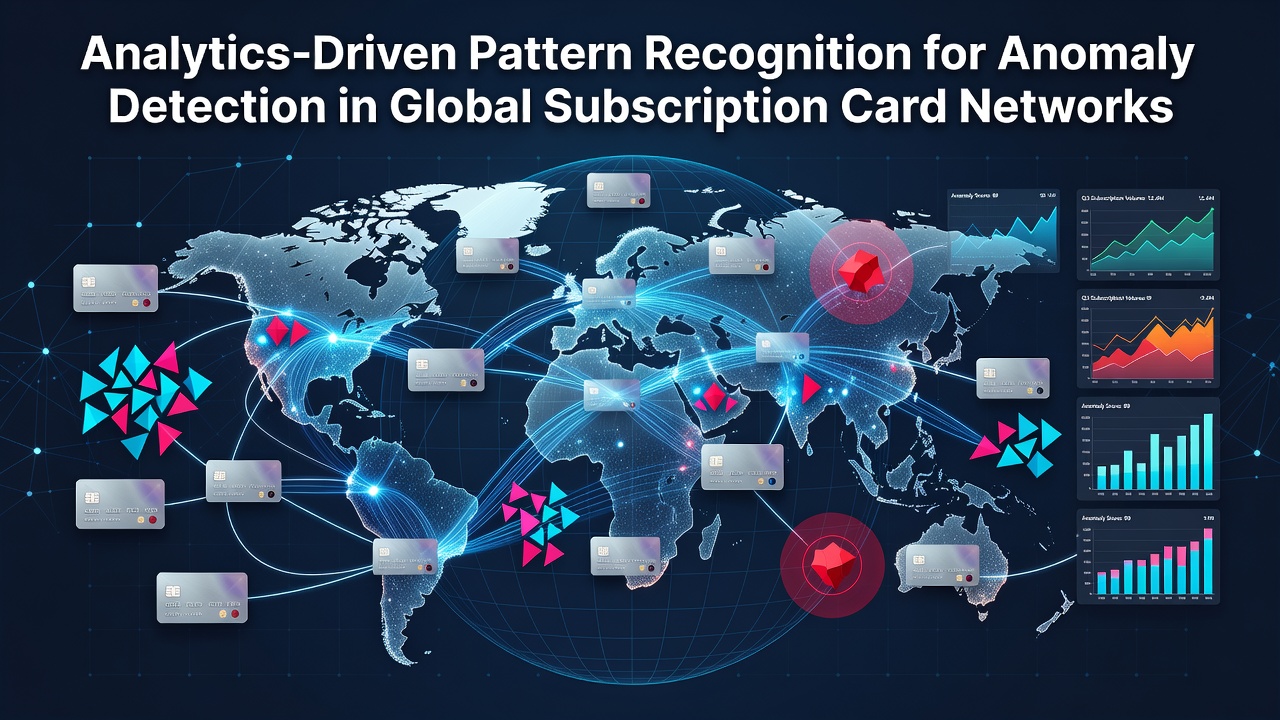
Global subscription card networks process billions of recurring transactions each month, and analytics teams apply pattern recognition models to identify anomalies that deviate from established user behaviors. These systems track payment frequencies, amounts, geographic origins, and device signatures while building baseline profiles for millions of cardholders. When a transaction falls outside learned parameters, automated alerts trigger reviews before funds settle.
Core Components of Pattern Recognition Models
Pattern recognition in this domain relies on supervised and unsupervised machine learning algorithms that process historical data streams from card issuers, acquirers, and processors. Clustering techniques group similar subscription profiles together, whereas neural networks learn sequential dependencies across payment cycles. Feature engineering incorporates variables such as time-between-charges, merchant category codes, and currency fluctuations, allowing models to flag deviations with measurable precision.
Researchers at institutions like the Bank for International Settlements have documented how these models adapt to seasonal variations in subscription renewals, noting that August 2026 data revealed spikes in cross-border renewals for digital services during summer travel periods. The same reports highlight integration of real-time velocity checks that compare current activity against multi-month averages drawn from global datasets.
Anomaly Detection Techniques in Practice
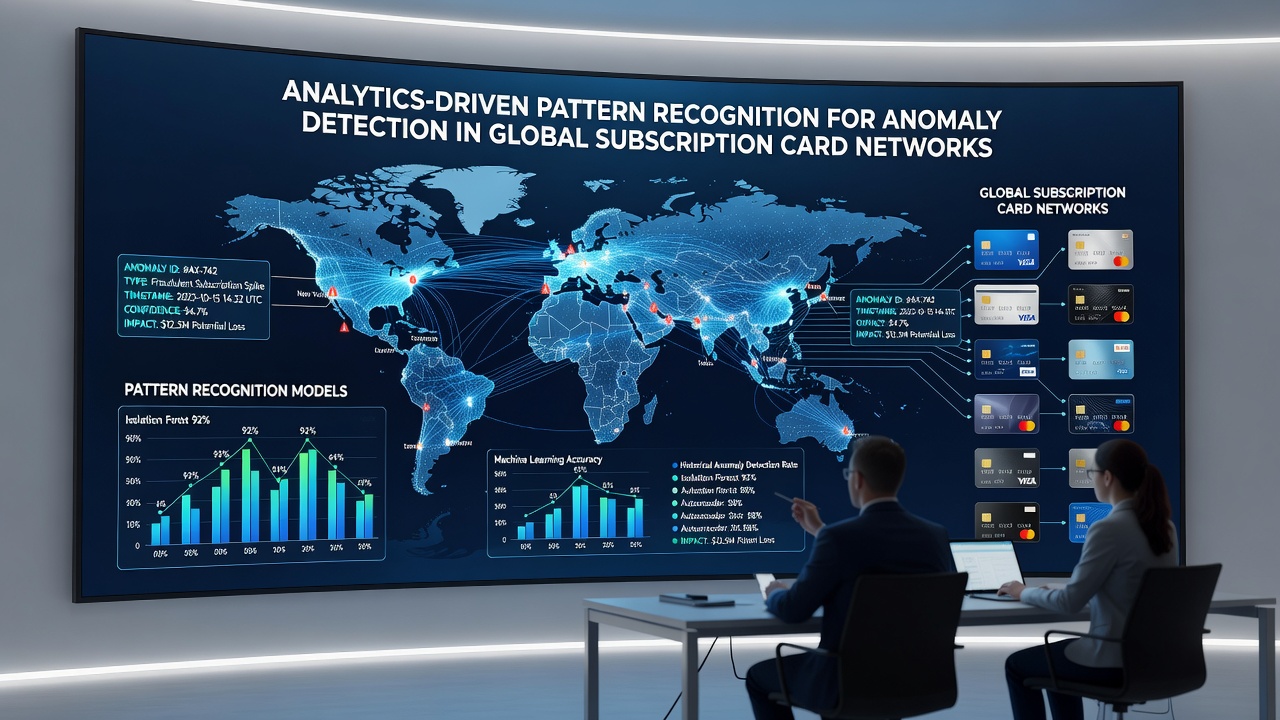
Anomaly detection operates through statistical thresholds and machine learning classifiers that assign risk scores to each recurring authorization request. Isolation forests and autoencoders isolate outliers by measuring reconstruction errors, while graph-based methods examine relationships between cardholders, merchants, and proxy networks. When scores exceed calibrated limits, transactions route to manual review queues or receive temporary holds pending additional authentication.
Take one large European card network operator that implemented ensemble models combining random forests with recurrent neural layers; observers note the system reduced false positives by cross-referencing IP geolocation against historical billing addresses. Similar approaches appear in North American processors where regulatory guidance from the Federal Reserve encourages continuous monitoring of subscription portfolios for signs of account takeover or synthetic identity usage.
Global Data Integration Challenges
Subscription networks span multiple jurisdictions, so data aggregation must comply with varying privacy regulations while maintaining model accuracy. Tokenization standards allow issuers to share anonymized behavioral features without exposing full card details, yet latency differences between regions can delay anomaly scoring. Teams address these gaps by deploying edge computing nodes that perform initial pattern matching before forwarding enriched signals to central analytics platforms.
What's interesting is how August 2026 updates to ISO 20022 messaging standards improved the granularity of transaction metadata available for pattern analysis, enabling finer segmentation of subscription categories such as streaming services versus SaaS platforms. Observers note that networks incorporating these enhanced fields report quicker identification of coordinated testing attacks where small charges probe card validity across multiple geographies.
Case Examples from Major Networks
One Asian-Pacific acquirer deployed time-series forecasting models that predicted normal renewal volumes for utility subscriptions and flagged sudden drops or increases tied to specific postal codes. The approach combined weather data overlays with billing cycles to account for seasonal usage shifts, producing anomaly alerts that aligned with documented fraud rings operating through compromised merchant accounts.
Canadian financial institutions have published findings showing that graph neural networks linking cardholder email domains to known data breach lists improved detection rates for compromised subscription credentials. These studies emphasize the value of combining internal transaction logs with external threat intelligence feeds updated daily from multiple continents.
Regulatory and Technical Considerations
Payment networks must balance detection sensitivity against customer friction, since overly aggressive blocking disrupts legitimate renewals and increases churn. Guidelines from the European Central Bank stress the importance of explainable AI outputs so that issuers can justify holds to cardholders and regulators. Model governance frameworks require periodic retraining on fresh data to prevent drift as subscription behaviors evolve with new product launches and economic conditions.
August 2026 metrics from several global processors indicate that hybrid models blending rule-based velocity limits with learned patterns achieve higher precision than either method alone. These systems log decision rationales for audit trails, satisfying requirements under emerging open banking directives that demand transparency in automated financial decisions.
Conclusion
Analytics-driven pattern recognition continues to evolve as subscription volumes grow and fraud tactics adapt across borders. Networks that maintain diverse data sources, rigorous validation protocols, and region-specific calibration achieve more reliable anomaly detection while supporting seamless recurring payments for legitimate users worldwide. Ongoing research and regulatory updates will shape the next generation of these systems as global card networks expand further into recurring revenue models.